
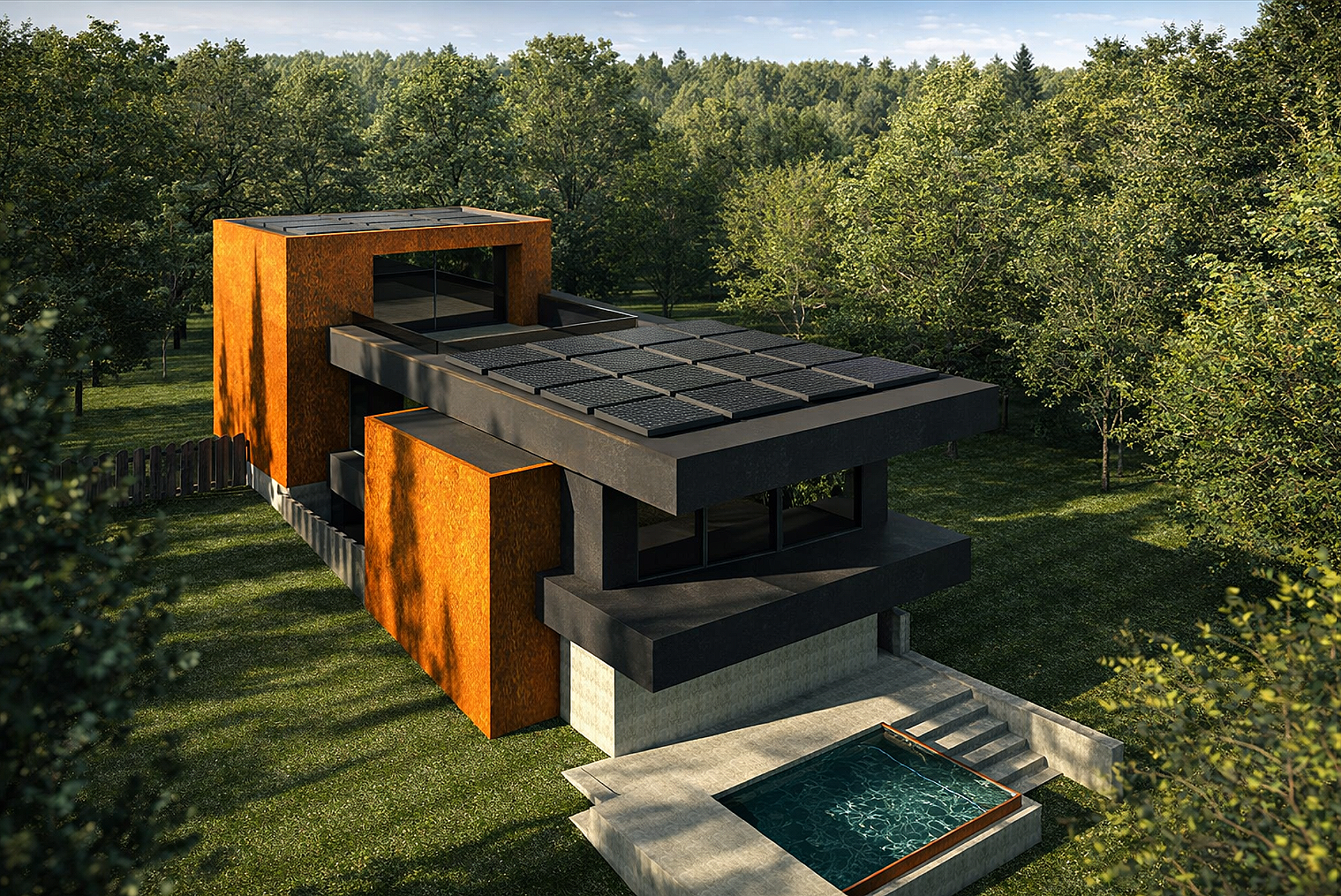
PARKLAND AVENUE RESIDENCE
LANGHORNE, PENNSYLVANIA
A CONTEMPORARY WOODLAND DWELLING DEFINED BY LANDSCAPE AND LOCAL INDUSTRIAL INFRASTRUCTURE
PROJECT TYPE
Single-Family Residential
STATUS:
Zoning Approved January 2026
Active Development
LOCATION:
Langhorne, PA
SCOPE:
Architecture & Design
Concept: Nature × Industry
The Parkland Avenue Residence is a contemporary home designed for a constrained infill site within a historic subdivision dating to 1903.
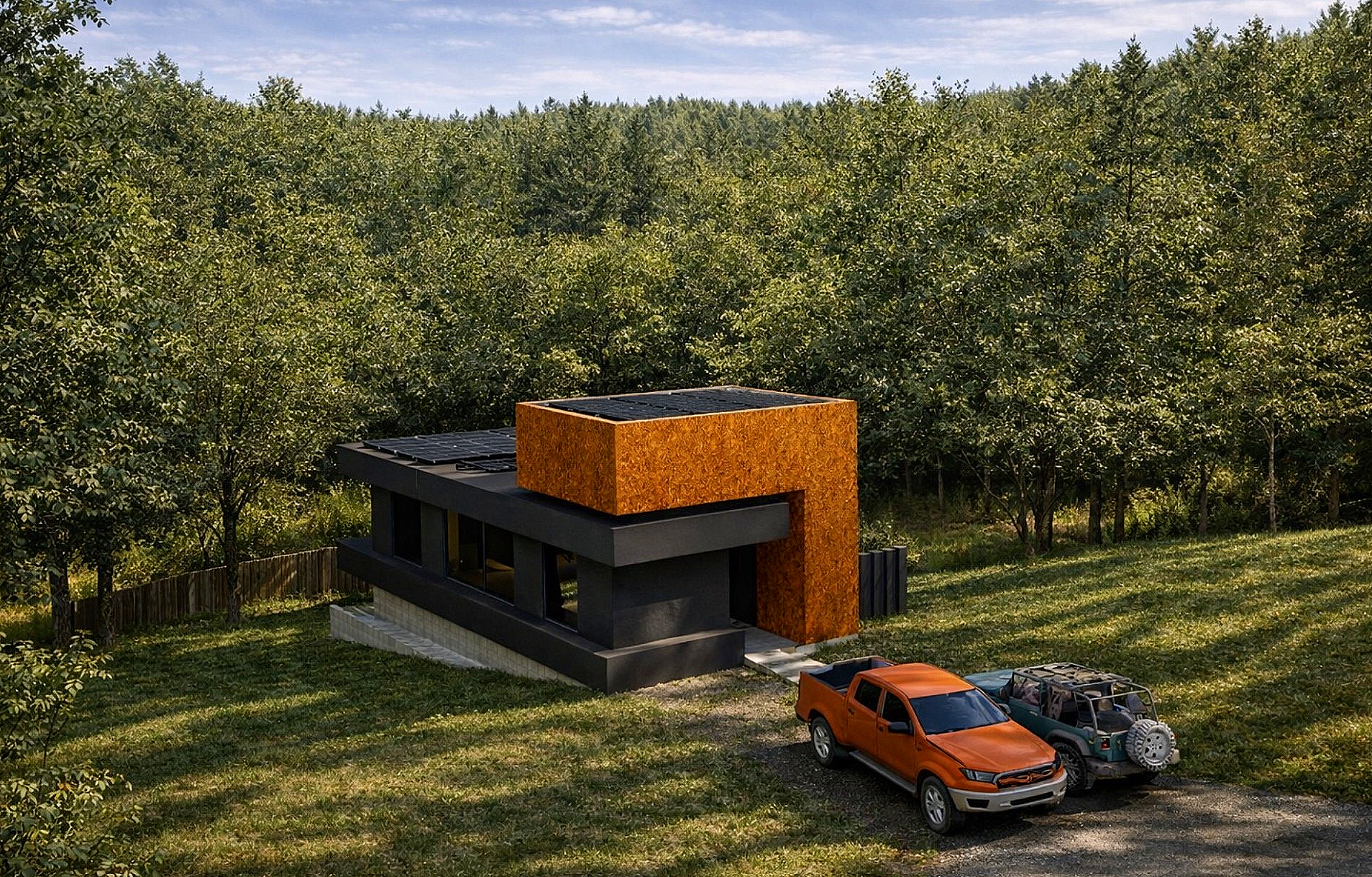
Set within a wooded landscape and adjacent to active rail infrastructure, the project responds to a unique intersection of natural and industrial conditions—using both as drivers for form, material, and spatial strategy.
The design is rooted in a deliberate contrast between the surrounding woodland and the site’s industrial edge.
Rather than resolving this tension, the architecture expresses it—pairing warm, weathering materials with precise, engineered forms.
The result is a building that sits comfortably within the landscape while acknowledging the infrastructure that defines it.
Site Response
The project occupies a compact parcel within an established neighborhood, defined by:
Dense surrounding woodland
Proximity to the Pennsylvania-Reading Railroad
Elevated terrain overlooking the Neshaminy Creek valley
These constraints informed a design that minimizes footprint, maximizes views, and integrates with the natural slope of the land.
Relationship to Context
While contemporary in expression, the residence is carefully scaled to align with the surrounding neighborhood.
The design introduces a modern architectural language without disrupting the existing residential fabric—balancing contrast with continuity.
Program & Layout
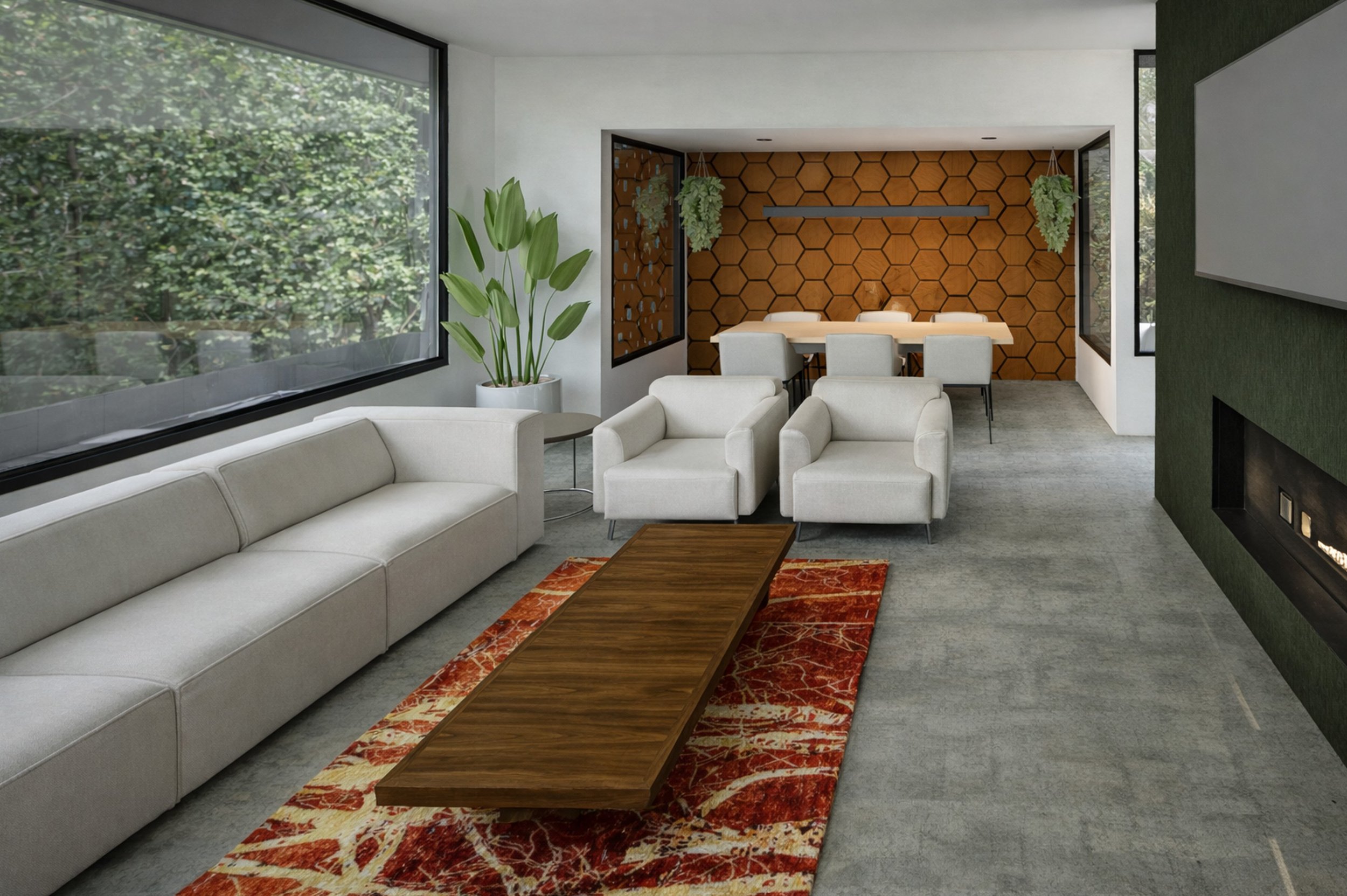
The house is organized to maximize usability within a compact footprint while maintaining strong spatial relationships.
The program includes:
Three bedrooms
Three full bathrooms
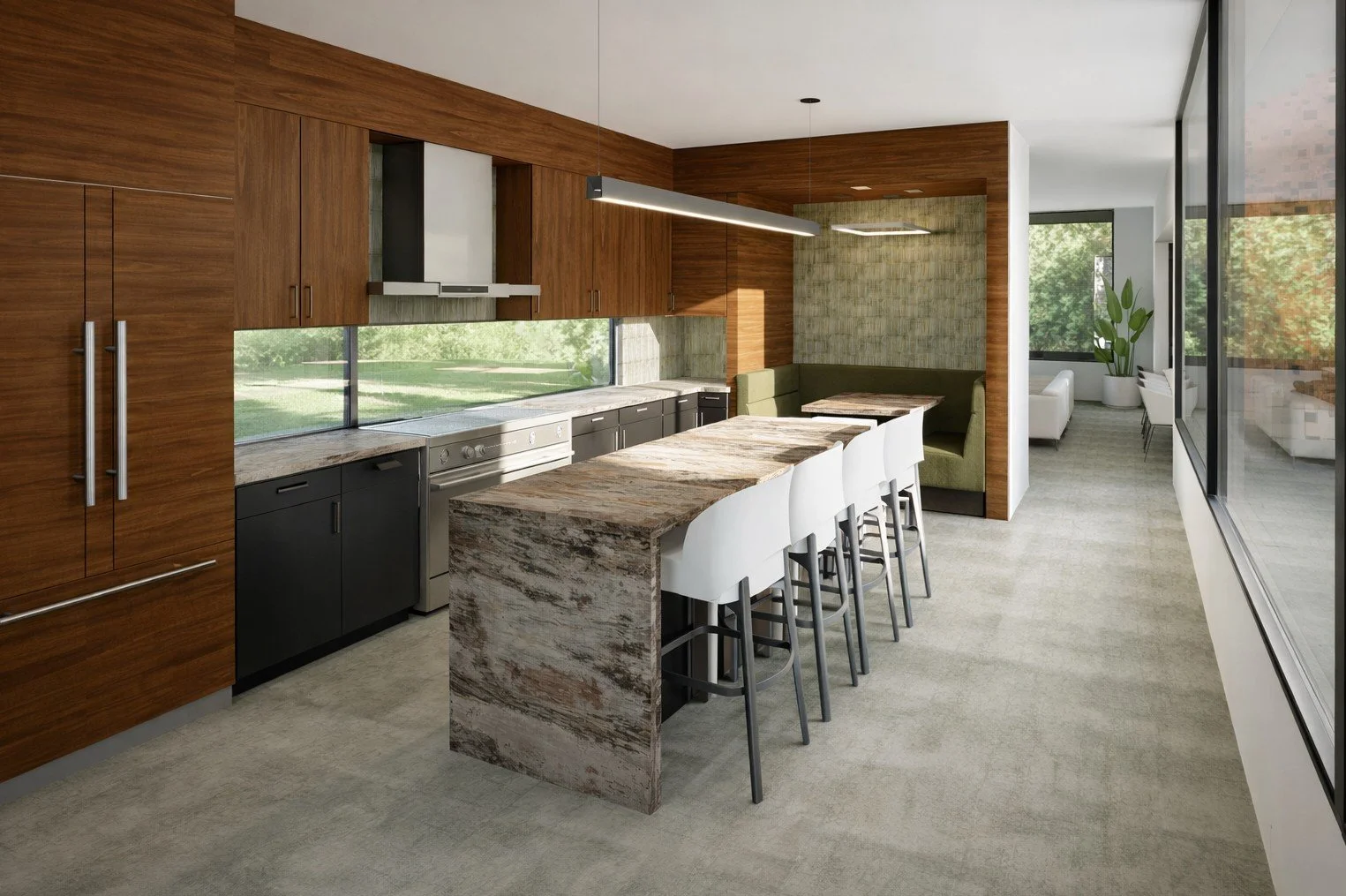
Open-plan kitchen, dining, and living area
Loft with Dedicated office space
A roof deck is integrated into the upper volume, providing elevated views across the valley and toward Philadelphia.
Form & Massing
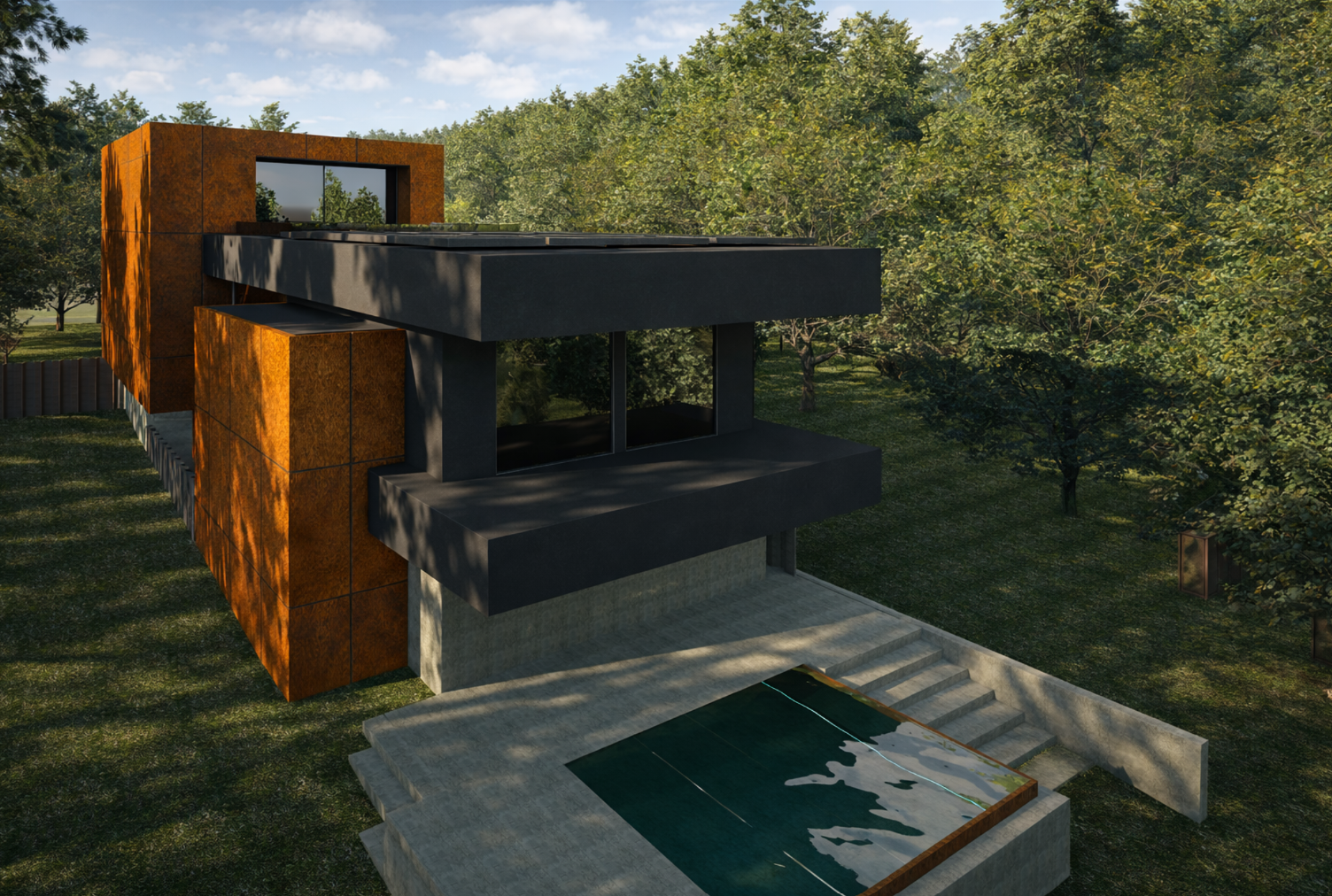
The building is composed of interlocking volumes:
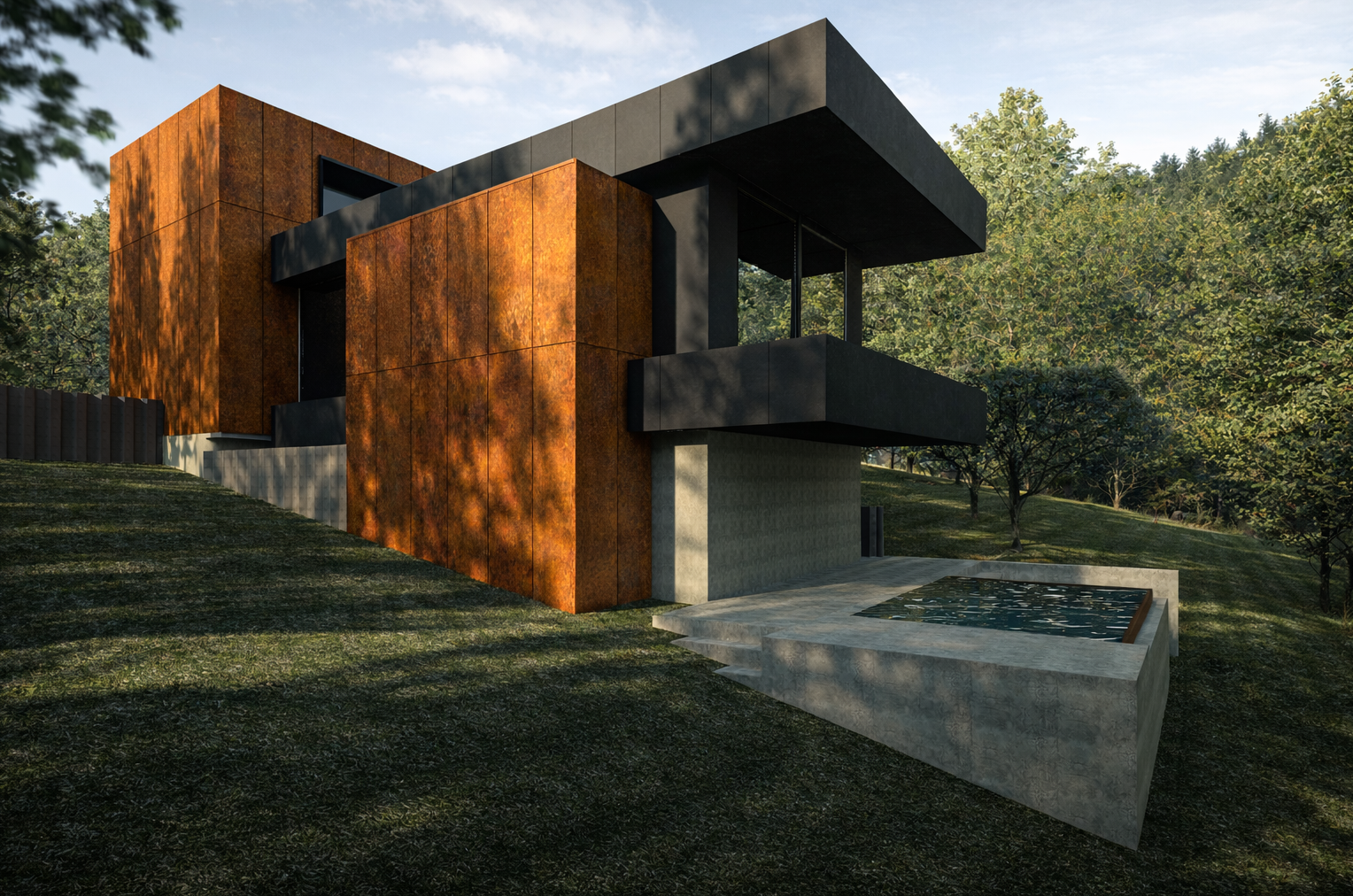
A grounded base embedded into the terrain
Projecting horizontal elements that extend into the landscape
Vertical weathering steel forms that anchor the composition
This approach reduces the perceived scale while creating depth, shelter, and framed views.
Material Palette
A restrained palette reinforces the project’s conceptual clarity:
Raw concrete anchors the structure to the ground
Black phenolic panels define horizontal volumes
Weathering steel introduces warmth and references industrial heritage
The weathering steel volumes act as sculptural elements—designed to evolve over time and integrate with the surrounding landscape.
Status: Zoning approval was granted on January 14, 2026. The project is currently in its final design phase, progressing toward permit submission and contractor bidding.
Architecture: DCT Design Studio
This project was developed independently as part of the studio’s architectural design portfolio.